Scoliosis Surgery
Scoliosis – It is an orthopaedic disease commonly known as spinal curvature. In the case of this disease, the spine, which is made up of bones called vertebrae, is bent to the right or left in a visible fashion.
Scoliosis – It is an orthopaedic disease commonly known as spinal curvature. In the case of this disease, the spine, which is made up of bones called vertebrae, is bent to the right or left in a visible fashion.
A scoliosis brace is a garment designed to prevent the spinal curvature of a person with scoliosis from worsening for the time being, since the condition cannot be fully treated.
Physical therapy is used at every stage of scoliosis, from the simplest curves to adjunctive treatment for severe curves.
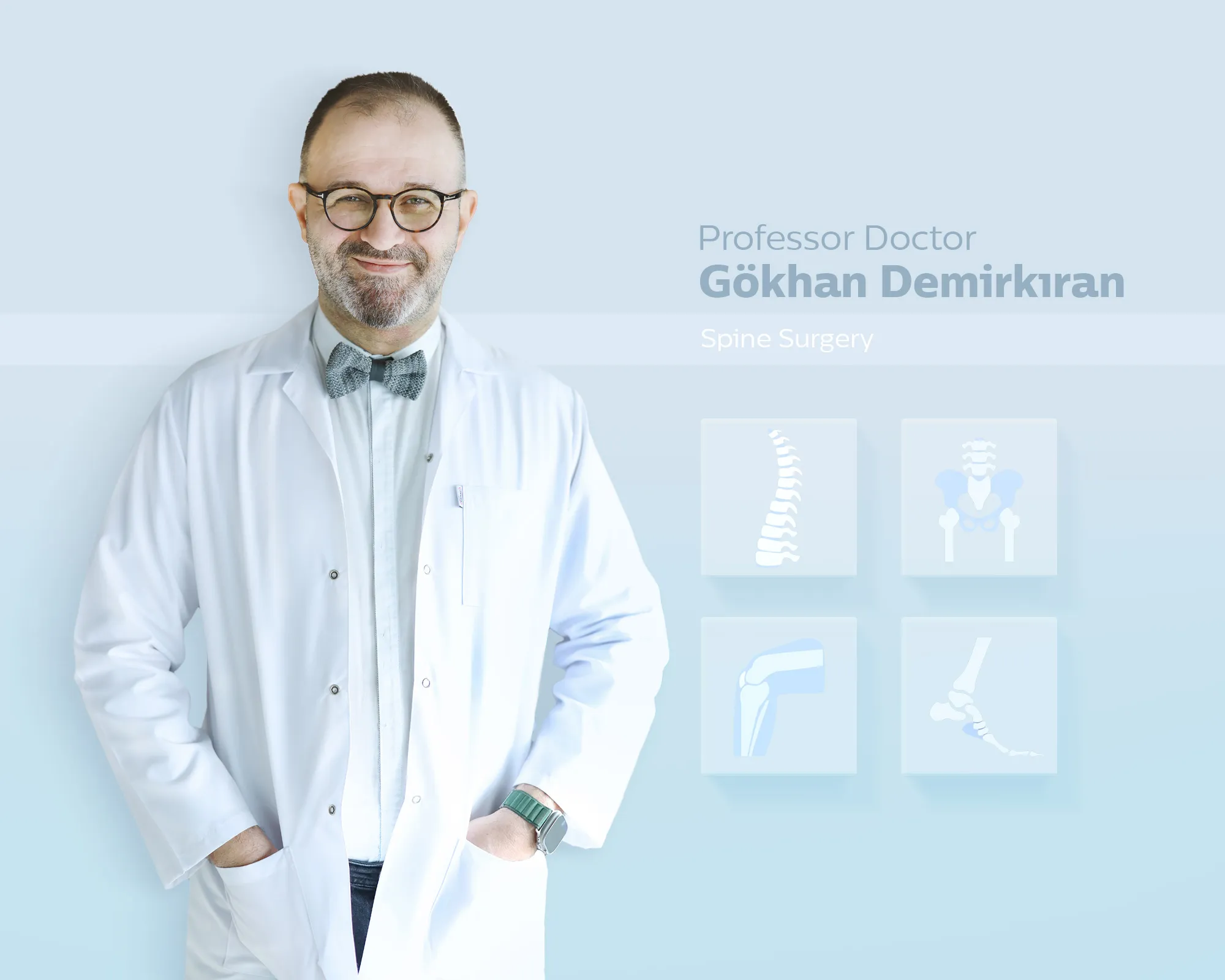
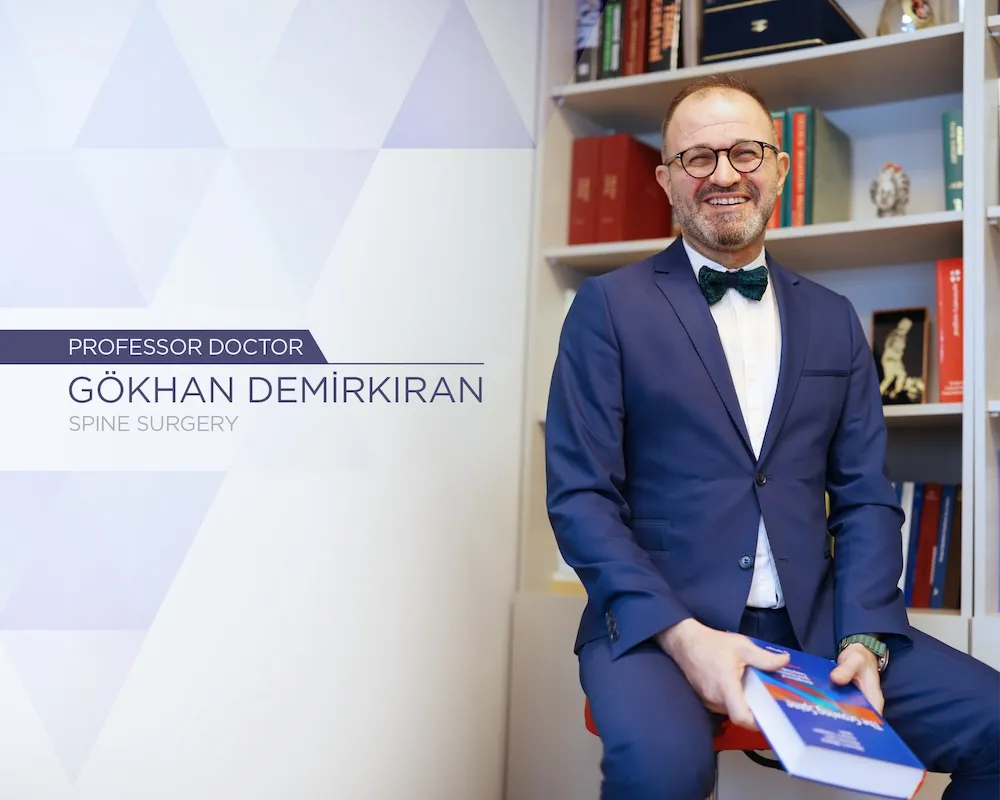
Dr. Halil Gökhan Demirkıran specialises in child and adult spine illnesses. In 2013, he spent 5 months at Stanmore University Spine Clinic in London and 4 months at San Francisco UCSF Spine Center for clinical and academic research. Dr. Demirkıran has participated in numerous academic projects in Hacettepe University and has made major contributions to the literature on spine surgery.

is an important treatment option, but it is only used when necessary. If exercise methods and braces do not improve the patient’s condition within a specific timeframe, surgery may be considered based on the degree of curvature. Grades between 40 and 50 begin to affect the quality of life in the future, and surgery is considered when these levels are reached. However, the angle of curvature is not the only factor that determines the need for surgery.

Although scoliosis usually manifests itself in adolescence, it can also be found in children and adults. For adolescent and childhood scoliosis, scoliosis brace treatment is preferred when the curve is between 20-25 and 45 degrees. Scoliosis bracing is only used for certain angles of curve. For curves greater than 45 degrees, surgical treatment is usually used.

Physical therapy for scoliosis is an effective treatment for any degree of scoliosis. In simple cases of less than 20 degrees, early diagnosis, observation, and physical therapy can lead to improvement. Again, for curves between 20 and 40 degrees, where corset use is generally recommended, physical therapy may be recommended for immobility caused by corset use or problems caused by normal immobility in daily life. For the post-operative period, it is recommended for quick recovery.

Scoliosis can be caused by a variety of factors. Idiopathic scoliosis is a word used when the cause of the scoliosis is unknown. This word is derived from the Greek words “idios” and “pathos” and meaning “strange, different pain.” It is a medical term that refers to disorders of uncertain origin.

Degenerative scoliosis is a type of scoliosis that often develops after the age of 50 and manifests as spine deformation with age. Curvature should be greater than 10 degrees, like with other types of scoliosis.

Scoliosis, which has different types based on its origins, is called congenital scoliosis if it developed before birth, that is, while the baby was still in the womb.

After idiopathic scoliosis, which is the most common type of scoliosis, neuromuscular scoliosis, which is the most common type of scoliosis, is a type of scoliosis caused by certain neuromuscular diseases, i.e., as the name suggests, neurological and muscular diseases.